
Cook-Line Perimeters
Grease and crumbs collect behind equipment legs, around casters, beneath accessible edges, and where the line meets the wall. These areas usually need scraping, degreasing, dwell time, and mechanical agitation.
Serving Portland, Oregon & surrounding areas
Open 24/7
Remove baked-on grease, food residue, and floor buildup with a detailed cleaning plan built around your equipment, operating hours, and kitchen conditions.
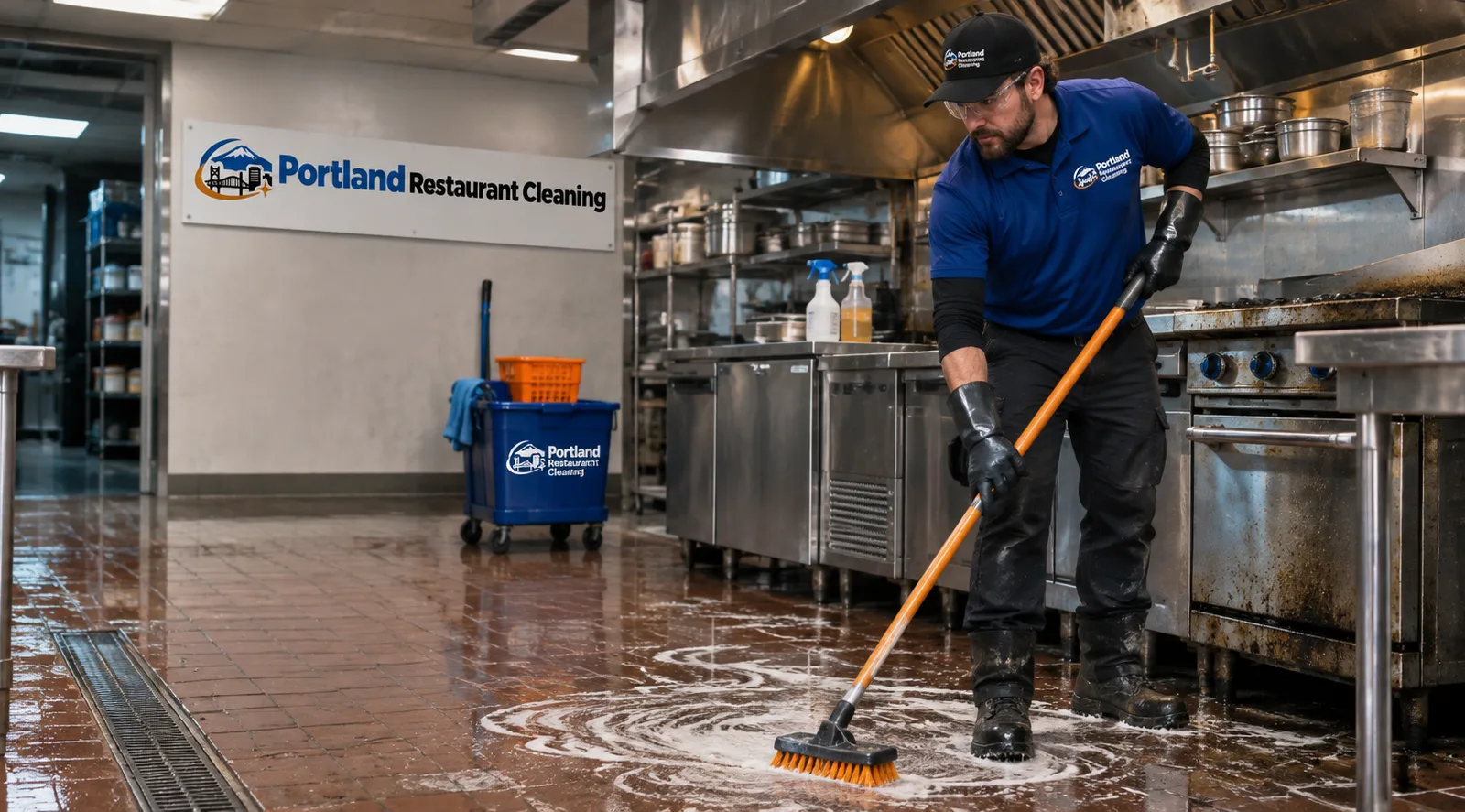
Restaurant Kitchen Deep Cleaning Hillsboro service targets the residue that routine closing duties leave behind. Grease migrates under cooking equipment, collects along wall edges, and settles into grout lines and textured flooring. A planned deep clean addresses those areas without treating the kitchen like a general office or dining room.
Portland Restaurant Cleaning brings the practical methods of an experienced restaurant service team in Portland to Hillsboro kitchens. We review the equipment layout, floor material, buildup, access limits, and service schedule before defining the work. The resulting scope identifies what will be cleaned, which items must be moved or protected, and where extra dwell time or agitation may be needed.
Hillsboro restaurants near the walkable Downtown core may have compact kitchens where access and equipment sequencing matter. Larger commercial sites around Tanasbourne can involve wider cook lines, prep areas, and longer floor runs. Restaurants near Orenco Station often need work coordinated around customer traffic and mixed-use surroundings. These operating conditions affect setup and timing, so they belong in the plan rather than being treated as afterthoughts.
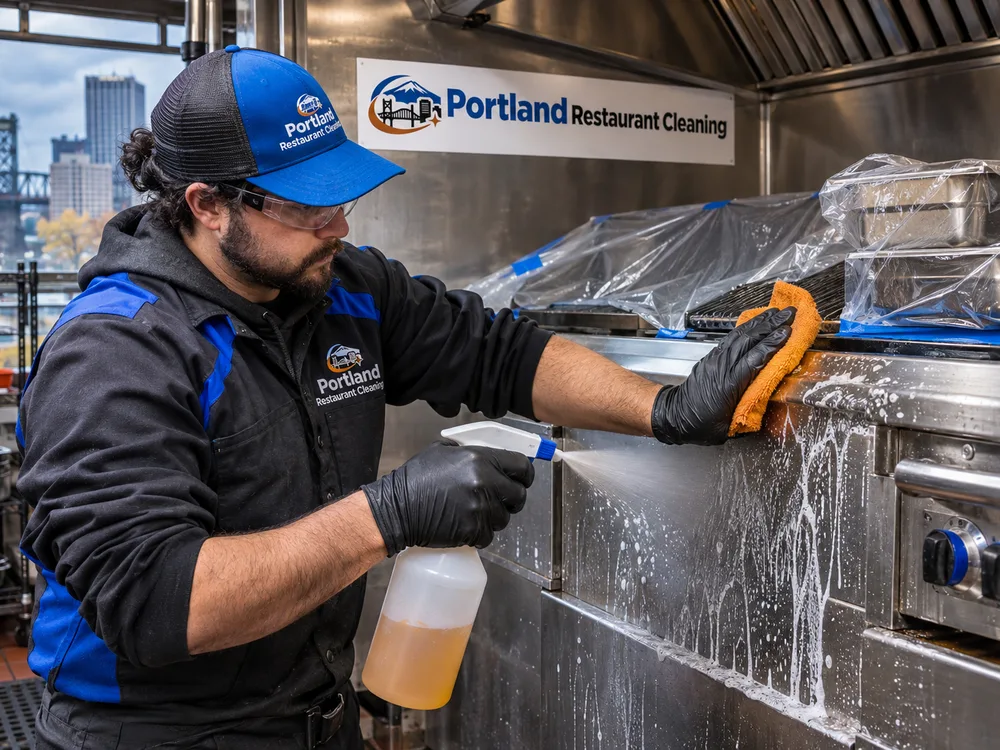
A kitchen deep clean can address cooking-line exteriors, stainless-steel work surfaces, backsplashes, wall panels, shelving, kick plates, equipment legs, casters, floor edges, and accessible areas beneath movable units. Degreasing methods are selected according to the soil and surface. Heavy alkaline products may be appropriate for compatible grease-coated materials, while stainless steel, painted surfaces, rubber components, and finished flooring may require different chemistry.
The work can also include accessible prep areas, utility spaces, hand-contact points, and floor drains when listed in the agreed scope. Food, utensils, and exposed ingredients must be removed or protected before cleaning begins. Electrical controls, pilot assemblies, and sensitive equipment components require careful isolation rather than direct spraying.
Canopy interiors, ductwork, fans, and rooftop exhaust components are specialized exhaust-system work and should not be assumed to be part of a general kitchen deep clean. The written scope should clearly distinguish accessible surface cleaning from any separately arranged specialist service.
Grease and crumbs collect behind equipment legs, around casters, beneath accessible edges, and where the line meets the wall. These areas usually need scraping, degreasing, dwell time, and mechanical agitation.
Splash residue, food soils, and buildup can remain around prep tables, sinks, shelving supports, and utility-room edges. Cleaning is adjusted for food-contact and non-food-contact surfaces.
A flat mop cannot fully reach toe kicks, base transitions, corners, damaged grout, or the narrow gaps around fixed equipment. Detail tools and controlled rinsing address these zones.
Handles, push plates, switches, and other touchpoints can be cleaned within the scope. Cleaning removes soil first; sanitizing is a separate step performed with a suitable product and its labeled contact time.
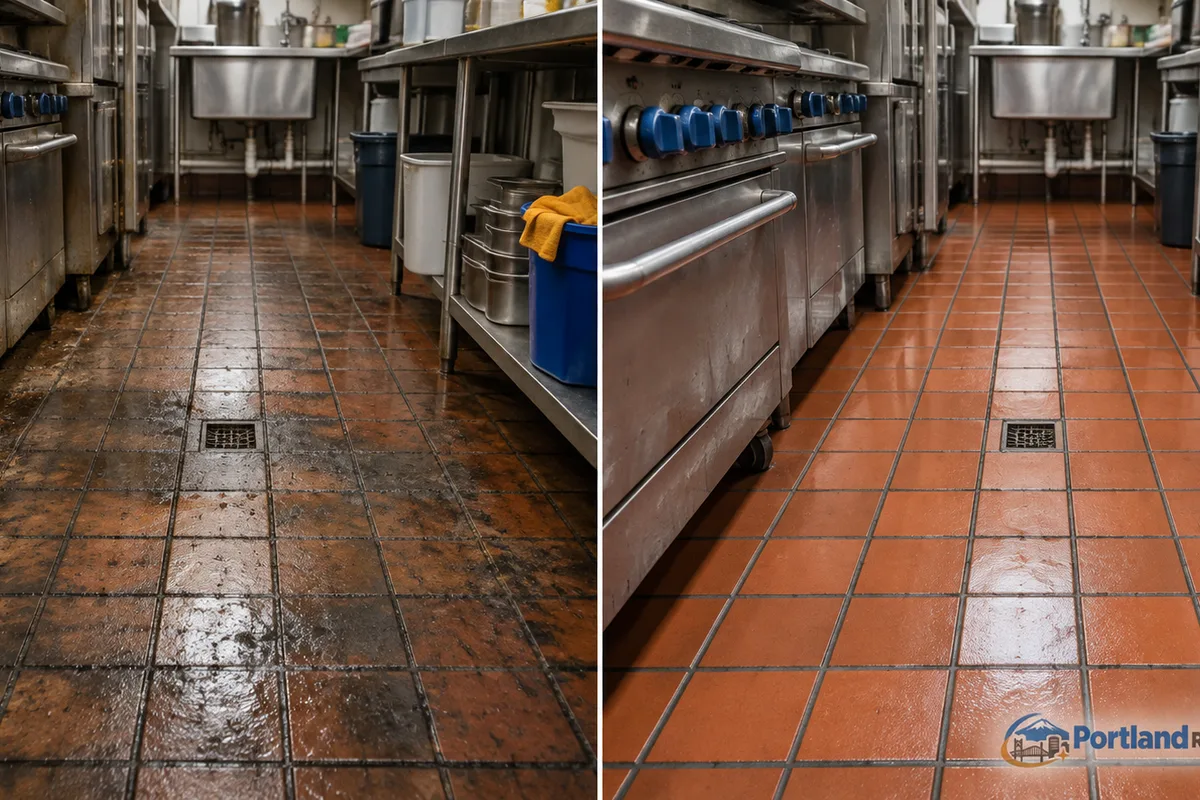
Restaurant Floor Cleaning Hillsboro service starts with identifying the floor, soil load, drainage, and slip concerns. Quarry tile and ceramic tile often tolerate stronger agitation than resilient flooring. Grout condition also matters because cracked or missing joints can retain moisture and residue. A knowledgeable crew does not assume one chemical concentration or brush type is safe for every floor.
The usual process removes loose debris, applies compatible cleaning solution, allows the required dwell time, agitates the surface, extracts or recovers the dirty solution, and rinses as needed. Edges and spaces beneath accessible equipment are detailed separately. Where floor drains are included, the surrounding area and accessible drain components are cleaned without forcing solids into the plumbing.
Hillsboro's rainy-season foot traffic can carry moisture and outdoor soil into entries and working areas. In a kitchen already exposed to fats and food residue, that added contamination can make floor care more demanding. Complete soil recovery and sensible drying time matter before employees resume normal movement.
Step 1 of 5
We discuss the cook line, prep zones, floor type, known trouble spots, equipment access, and the time available after service or during a closure. Photos or an on-site review may be needed for a dependable scope.
Step 2 of 5
The written plan identifies included surfaces, exclusions, access requirements, and responsibilities for food removal or equipment shutdown. Any movable equipment must be safe to disconnect or reposition.
Step 3 of 5
Food-contact items and sensitive components are covered or removed as appropriate. Loose debris is collected before wet cleaning so it is not spread into grout lines or drains.
Step 4 of 5
Compatible chemistry is applied with enough dwell time to soften buildup. Technicians then scrub floors and detail edges, legs, casters, wall transitions, and accessible spaces around equipment.
Step 5 of 5
Spent solution and loosened soil are recovered, surfaces are rinsed when required, and the work area is checked against the agreed scope. The kitchen needs suitable drying time before normal operations resume.
A useful estimate depends on more than square footage. We consider the number and type of cooking appliances, grease thickness, floor texture, grout condition, access behind equipment, drainage, water availability, parking or loading constraints, and the length of the available work window. A compact kitchen with severe buildup can require more labor than a larger room that receives regular detailed care.
Scheduling also deserves attention. Deep cleaning is commonly arranged after the final service, on a closed day, or during another planned shutdown. The restaurant should allow time for setup, chemical dwell, agitation, soil recovery, inspection, and drying. If staff need to restart prep early, that deadline should be discussed before the scope is approved.
Deep cleaning does not repair cracked tile, failed grout, damaged coving, leaking equipment, or plumbing problems. It can reveal these conditions once heavy soil is removed. Identifying them in the work review helps the operator separate cleanable buildup from maintenance that requires another trade.
Share the kitchen layout, floor type, operating schedule, and areas of concern to receive a written scope built around the actual work.
Call for a Free QuoteThe price depends on kitchen size, grease level, equipment access, floor material, and the amount of detailing required. A lightly soiled prep kitchen and a high-volume cook line are different jobs even when their square footage is similar. An on-site review or clear photos help establish the labor, chemistry, equipment, and scheduling requirements before a written price is confirmed.
The time is set by the agreed scope, buildup, access, and drying requirements. A limited floor and perimeter cleaning may fit within an overnight window, while a larger kitchen with heavy cook-line grease may need a longer shutdown or phased work. Hillsboro restaurants near Downtown or Orenco Station should also account for building access, parking, and quiet-hour requirements when selecting the service window.
Yes, overnight service may be possible when the scope and access window allow enough time for cleaning, inspection, and drying. Staff should remove or secure food and utensils, provide approved access, and complete any equipment shutdowns assigned to the restaurant. The reopening deadline must be established before work starts.
Movable equipment can be repositioned only when it is safe, accessible, and included in the scope. Technicians should not disconnect gas, hard-wired electrical, plumbing, or fire-suppression connections unless they are qualified and specifically authorized to do so. Fixed or unsafe-to-move units are cleaned around and beneath only where access permits.
Sanitizing is included only when it is specifically listed in the approved scope. Cleaning removes grease and visible soil, while sanitizing uses an appropriate product at its labeled concentration and contact time after the surface is clean. Food-contact surfaces may also require a potable-water rinse when the product label calls for one.
The interval should be based on cooking volume, menu, grease production, floor texture, staffing routines, and inspection findings. Frying and high-volume cooking usually create buildup faster than light preparation. A practical schedule uses regular visual checks of grout, equipment edges, wall transitions, and slip-prone traffic lanes rather than relying on one fixed interval for every kitchen.
Accessible exterior hood surfaces may be included, but internal ductwork, fans, and rooftop exhaust components require a separately defined specialist scope. Restaurants should confirm the boundary in writing because surface degreasing and exhaust-system cleaning involve different access, equipment, and safety procedures.
Tell Portland Restaurant Cleaning about your cook line, floor condition, access window, and stubborn buildup. We will use those details to define the work and prepare a clear plan for your Hillsboro restaurant.