Restaurant cleaning · Portland

Restaurant Cleaning Services

Detailed front and back of house cleaning built around your operating hours, traffic patterns, surfaces, and food-service environment.

✓ Front and back of house
✓ After-hours scheduling available
✓ Written task frequencies
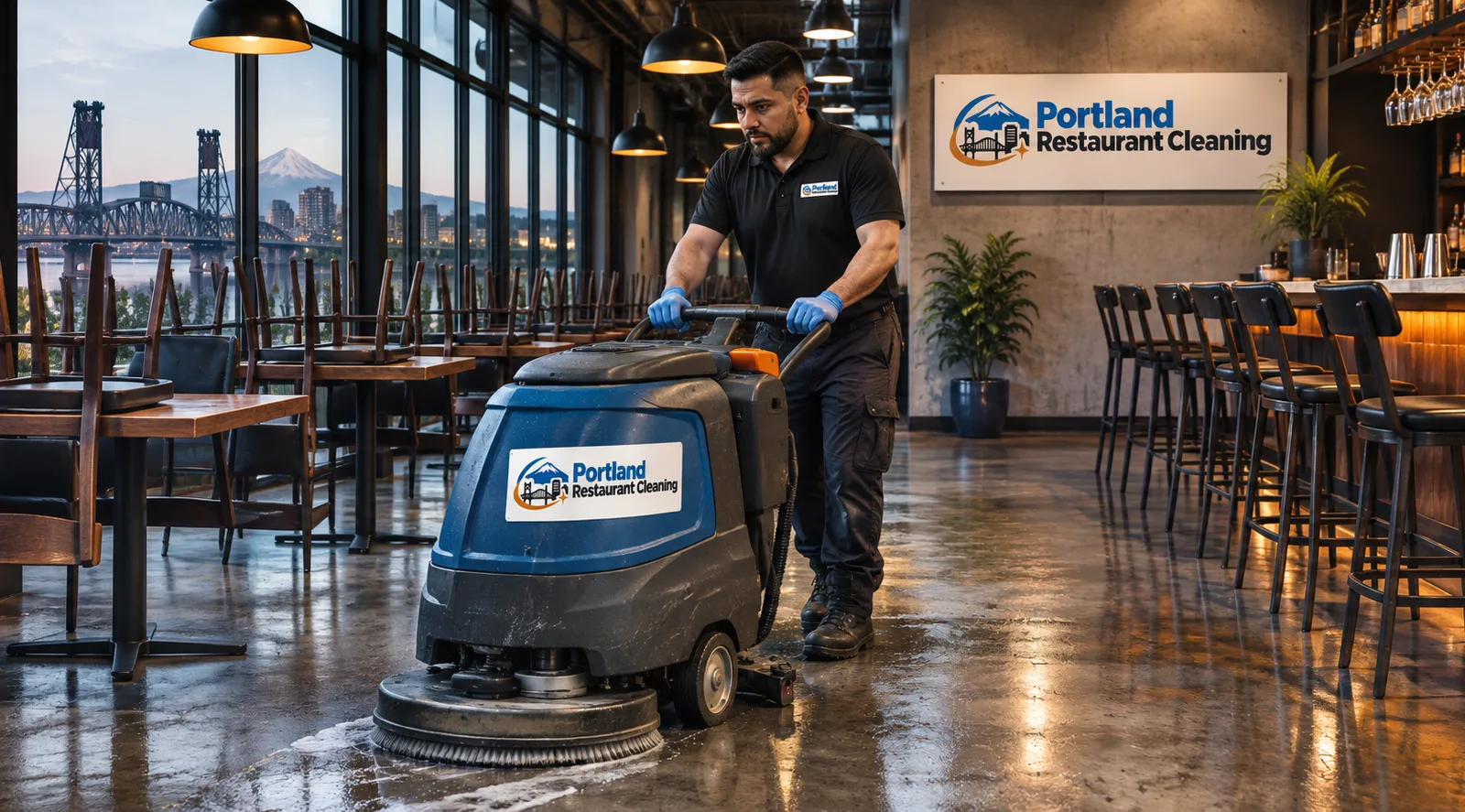
Professional cleaner using an autoscrubber on a restaurant dining room floor after closing, with tables, chairs, and a bar in the background
Planned for food-service spaces

Reliable Restaurant Cleaning in Portland

Restaurant Cleaning Services should support a clean guest experience without disrupting prep, service, or closing duties. Portland Restaurant Cleaning develops practical scopes for dining rooms, bars, restrooms, floors, and selected back of house areas. Work can be scheduled around operating hours, and each plan identifies the spaces, tasks, frequency, and access requirements before cleaning begins.

To address the conditions restaurant operators face every day, Portland's local restaurant service accounts for tracked-in rain, food debris, grease film, beverage residue, crowded floor plans, and surfaces that require different products. A Pearl District dining room with steady foot traffic may need frequent attention at its entrance and beneath tables. In the Central Eastside, nearby street activity can add grit to entry floors. Alberta Arts District and Division Street restaurants often have compact rooms where crews must work carefully around closely spaced furniture. These details affect labor, equipment selection, and cleaning frequency.

A clear task list matters. Routine janitorial work may include wiping tables and other agreed surfaces, vacuuming, damp mopping, cleaning restrooms, emptying waste, and checking touchpoints. Periodic work can address floor buildup, high ledges, vents, light fixtures, and other areas outside the nightly routine. We define those differences so managers know what will be completed during each visit.

Request a Callback
Work-zone coverage

Front and Back of House Cleaning

Request a Callback
✓

Front Of House Cleaning

Entry glass, host areas, guest-facing touchpoints, seating zones, partitions, ledges, and accessible fixtures are cleaned according to the written scope. Crews work methodically around furniture and décor rather than treating the room as an open floor.

✓

Dining Area Cleaning

Restaurant dining room cleaning addresses crumbs, spills, dust, fingerprints, and soil around table bases, booths, chair legs, window sills, and perimeter edges. Furniture movement and reset expectations are agreed on in advance.

✓

Restaurant Bar Cleaning

Bar cleaning can cover guest-facing counters, stools, foot rails, accessible shelving, exterior equipment surfaces, floors, and splash-prone areas. Product choice is matched to finished wood, stainless steel, glass, tile, or other materials.

✓

Restaurant Restroom Cleaning

Toilets, urinals, sinks, mirrors, partitions, dispensers, touchpoints, floors, and waste receptacles receive a defined cleaning and disinfection routine. Restocking can be included when supplies and responsibilities are established.

✓

Restaurant Back Of House Cleaning

Agreed back of house tasks may include floors, baseboards, walls, waste areas, and accessible exterior surfaces. Exhaust-system cleaning, internal appliance cleaning, and other specialized work must be identified separately rather than assumed.

✓

High Dusting

Periodic high dusting removes buildup from accessible vents, pipes, beams, ledges, light housings, and ceiling-level surfaces. Safe access, fixture condition, and whether food or equipment must be protected are reviewed first.

Restaurant Floor Cleaning Based on the Surface

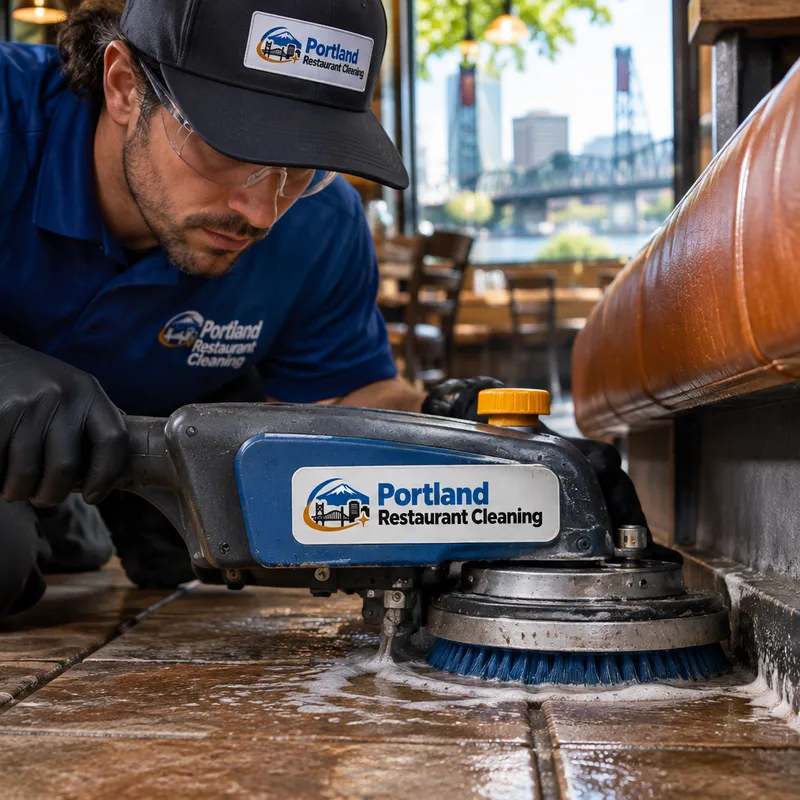
Cleaner using a compact floor machine on restaurant tile, detailing grout lines beneath fixed seating
Equipment and cleaning chemistry should match the floor material and the type of soil.

Restaurant floors collect abrasive grit, moisture, food residue, and grease. The right method depends on both the flooring and the soil. Quarry tile and textured tile may require dwell time, agitation, wet recovery, and careful rinsing. Sealed concrete, luxury vinyl tile, hardwood, and resilient flooring have different chemical and moisture limits. Grout lines and perimeter edges often need separate detail work because a mop or autoscrubber cannot fully reach them.

Routine service may combine vacuuming or dust mopping with damp mopping. Larger open areas may be suitable for an autoscrubber, while compact dining rooms need smaller equipment and hand work around booths and fixed seating. Periodic machine scrubbing can remove embedded buildup that daily cleaning leaves behind. Any finish application, stripping, or recoating should be specified as a separate floor-care task.

Portland's wet months make entrance control especially useful. Walk-off mats capture water and grit before it spreads through the dining room, but saturated mats and dirty entry edges still need attention. The floor plan should identify slip-prone transition points near entrances, bars, dish areas, and restroom approaches. Wet-floor controls and sufficient drying time are part of responsible scheduling.

Request a Callback
Above the nightly clean

High Dusting and Periodic Detail Work

Dust does not stay at floor level. It settles on exposed ductwork, pipes, beams, vents, hanging fixtures, sign tops, wall ledges, and décor. Air movement can disturb that buildup, making high dusting an important periodic task in dining rooms and other guest-facing spaces.

Before work starts, the crew should identify the height, access route, nearby food-contact surfaces, delicate fixtures, and equipment that needs protection. Extension tools or suitable access equipment may be required. Dust should be captured rather than scattered, followed by cleaning of lower surfaces and floors. Areas near active food preparation need careful scheduling so exposed food and clean utensils are not present during overhead work.

High dusting frequency depends on ceiling design, air movement, cooking activity, and how quickly visible buildup returns. Open ceilings generally contain more individual surfaces than a flat finished ceiling. A walkthrough makes it possible to separate routinely reachable ledges from work that requires special access or coordination.

Request a Callback

How Restaurant Cleaning Services Are Set Up

  1. Step 1 of 4

    Walk Through the Restaurant

    We review the dining room, bar, restrooms, entrances, floors, and requested back of house areas. The walkthrough documents surface types, tight access, high dusting needs, storage limits, alarms, keys, and the best service window.

  2. Step 2 of 4

    Define Tasks and Frequencies

    Each task is assigned a frequency such as every visit, weekly, or periodic. The scope also states exclusions, supply responsibilities, furniture expectations, and any areas that must remain undisturbed.

  3. Step 3 of 4

    Plan Access and Safety

    Managers and cleaners agree on entry procedures, alarm handling, waste placement, wet-floor controls, and lockup. Cleaning products are selected for the surface and task, and safety data sheets should be available for workplace chemicals.

  4. Step 4 of 4

    Begin Service and Check the Work

    The crew follows the agreed sequence and checklist. Early visits provide a chance to adjust timing or clarify details, while ongoing inspections help keep recurring work aligned with the written scope.

Request a Callback

A Cleaning Plan That Fits Restaurant Operations

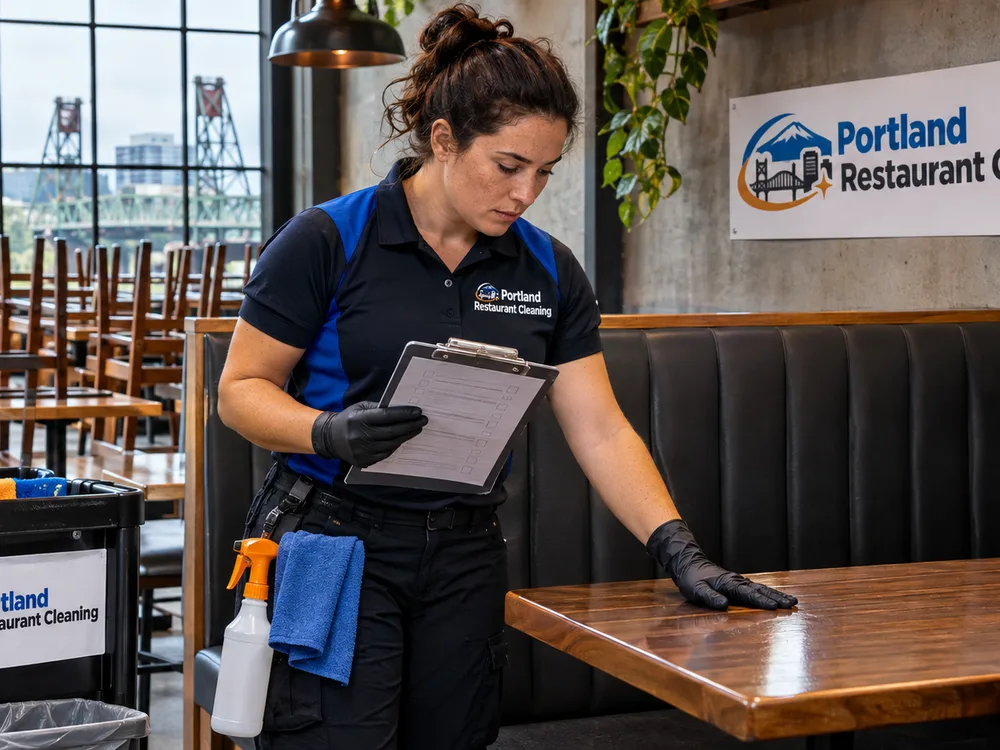
Cleaning professional following a written checklist while inspecting tables, booths, and touchpoints in a closed restaurant dining room
A written scope connects each area with a task, frequency, and quality standard.

Restaurant cleaning must fit the rhythm of the business. A crew working after close needs reliable access and enough time for floors to dry before employees return. Daytime work may be better for periodic dusting or detail cleaning when the restaurant can isolate an area. The plan should account for deliveries, prep shifts, late seating, private events, and shared building access.

Consistency also depends on communication. Managers should have a clear way to report a spill pattern, damaged dispenser, recurring floor issue, or room that needs added attention. Photos can document an unusual condition, but they do not replace a specific task list and in-person quality checks.

Food-contact surfaces require particular care. Cleaning removes soil, while sanitizing reduces microorganisms on a previously cleaned surface when the correct product, concentration, and contact time are used. Disinfectants are commonly used on suitable non-food-contact surfaces according to their labels. Responsibilities for tables, prep surfaces, equipment interiors, and warewashing areas should be explicit so critical tasks are neither duplicated nor missed.

Request a Callback

A walkthrough turns general cleaning expectations into a written scope based on your rooms, surfaces, operating schedule, and recurring trouble spots.

Call for a Free Quote
Scope and scheduling

Restaurant Cleaning Questions

How much do restaurant cleaning services cost in Portland?+

Restaurant cleaning is usually priced after a walkthrough because labor changes with square footage, service frequency, soil level, floor type, restrooms, access, and the amount of furniture. High dusting, restorative floor work, and detailed back of house cleaning are often priced separately from recurring service. A compact dining room with open access requires a different plan than a multilevel restaurant with a bar and late closing time. The written proposal should state tasks, frequencies, exclusions, and supply responsibilities.

Can cleaning be scheduled after the restaurant closes?+

Yes, after-hours cleaning can be arranged when the service window allows enough time to complete the scope and let floors dry. The access plan should cover keys, alarms, lockup, employee arrival, waste placement, and any areas occupied by late-working staff. Portland restaurants in mixed-use buildings may also need cleaning timed around shared entrances, quiet hours, loading access, or building security procedures.

What is included in restaurant front of house cleaning in Portland?+

Front of house cleaning can include entries, host stations, dining rooms, bars, guest-facing touchpoints, restrooms, floors, ledges, and waste removal. The exact list depends on the written agreement. Tabletop responsibilities, furniture movement, interior glass, supply restocking, and periodic high dusting should be stated clearly rather than assumed.

Does restaurant back of house cleaning in Portland include kitchen exhaust systems?+

Kitchen exhaust-system cleaning should not be assumed to be part of routine back of house janitorial service. Hoods, ducts, fans, internal cooking equipment, grease traps, and pest-related work may require separate specialists, access, and scheduling. A standard scope may instead cover agreed floors, walls, baseboards, waste areas, and accessible exterior equipment surfaces.

How often should restaurant floor cleaning be scheduled?+

Floor cleaning frequency should match traffic, soil, flooring material, and spill exposure. Guest areas may need attention every service visit, while edge detailing, grout work, or machine scrubbing can follow a periodic schedule. During Portland's rainy weather, entrances and transition areas often need added mat care and moisture checks because water and grit are tracked indoors.

Can you clean while the restaurant is open?+

Limited cleaning can be completed during operating hours when the work area can be controlled without interfering with guests, food handling, or staff routes. Restroom checks, spot cleaning, and isolated detail work may be suitable. Machine floor cleaning, overhead dust removal, and tasks involving wet surfaces or stronger chemicals are generally better scheduled during a closed or restricted period.

How soon can recurring restaurant cleaning begin?+

The start date depends on walkthrough availability, scope approval, crew scheduling, access setup, and whether an initial deep clean is needed. A restaurant with substantial floor or overhead buildup may benefit from corrective cleaning before recurring visits begin. That creates a practical baseline for routine work and quality checks.

Start with a walkthrough

Build a Clear Cleaning Plan for Your Restaurant

Tell Portland Restaurant Cleaning about your dining room, bar, restrooms, floors, back of house needs, and preferred service window. We will review the space and define a practical scope before work begins.